This guide is for anyone choosing between regular microneedling and radiofrequency (RF) microneedling and wondering whether the extra cost and recovery of RF is worth it. Both use fine needles, both build collagen, and both get described as the same thing online. They are not.
The one-line answer: regular microneedling is the gentler choice for texture, pores, fine lines, and mild scarring, while RF microneedling adds heat for laxity, deeper scars, melasma, and redness. At Jade Aesthetics in Wheaton, IL we offer both, so the choice comes down to your skin, not our equipment.
What is the difference between microneedling and RF microneedling?
#The difference is heat: regular microneedling uses needles alone, while RF microneedling also sends radiofrequency energy through the needles to warm the deeper layers of skin. That heat is what lets RF microneedling tighten tissue and treat concerns that needles alone cannot reach.
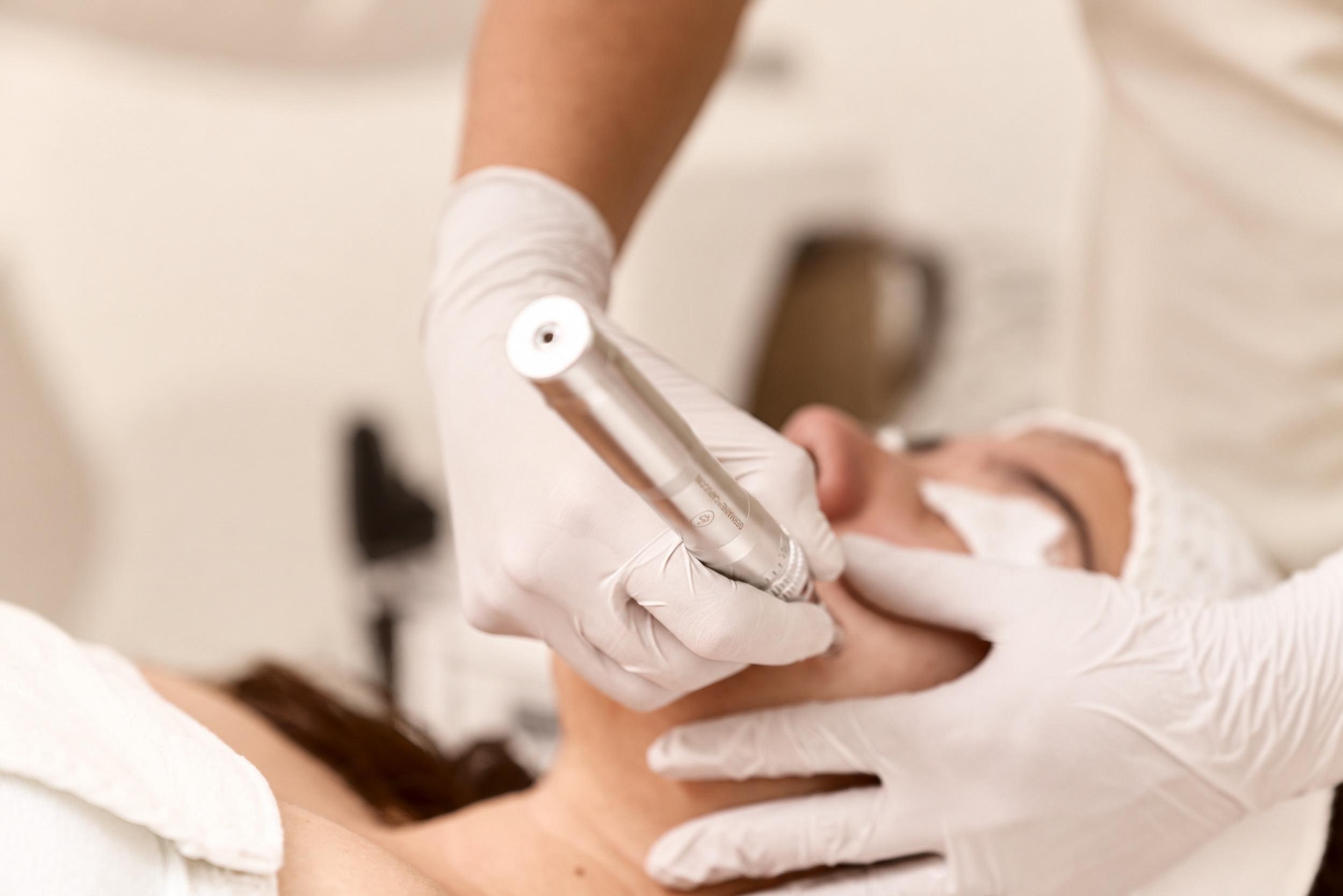
Regular microneedling, also called collagen induction therapy, uses a pen tipped with very fine, sterile needles to create thousands of controlled micro-channels. Each one closes within hours, and the skin responds by building fresh collagen and elastin. There is no heat, no acid, and no light.
RF microneedling starts the same way, then sends radiofrequency energy through the needles once they are in the skin. Our RF microneedling device is Sylfirm X, which adjusts from 0.3 to 4.0 mm and has two modes: pulsed wave for redness and some pigment problems, and continuous wave for collagen and firmness.
Here is how they compare side by side:
| Microneedling | RF microneedling (Sylfirm X) | |
|---|---|---|
| How it works | Needles create micro-channels | Needles plus radiofrequency heat |
| Best for | Texture, pores, fine lines, mild acne scars, dullness | Laxity, deeper acne scars, melasma, rosacea, redness |
| Comfort | Numbed first; light scratching | Numbed for 30 to 45 minutes; warm prickling |
| Downtime | 24 to 48 hours of pinkness | 1 to 3 days of redness |
| Typical series | 3 to 6 sessions, 4 to 6 weeks apart | 3 to 4 sessions, about 4 weeks apart |
| Results | Build over 4 to 6 weeks after each session | Build over 2 to 3 months |
| Cost per session | Lower | Higher |
| Maintenance | A session every few months | Once or twice a year |
Who is regular microneedling best for?
#Regular microneedling is best for people whose main concerns are rough texture, enlarged pores, fine lines, mild acne scarring, or dull skin, and who want a gentler series with a shorter recovery. It is also a good fit if you want to build collagen gradually without heat.
It tends to suit:
- Texture and pores. Over a series, new collagen smooths rough patches and softens the look of enlarged pores.
- Mild, shallow acne scars. Scar tissue remodels slowly, so these usually sit at the higher end of the session range.
- Dull, tired skin. Even a single session leaves skin looking fresher for a few weeks.
- Pairing with a topical. The open channels are a delivery route for products such as exosomes or PRP, and there is no heat to manage alongside them.
- Deeper skin tones cautious about lasers. With no heat or light involved, the risk of post-inflammatory darkening is lower than with many energy treatments.
If you want a lighter version before an event, the Spotlight facial is a single-visit treatment that pairs a light microneedling pass with hyaluronic acid and exosomes.
Who is RF microneedling best for?
#RF microneedling is best for people with skin laxity, deeper acne scarring, melasma, rosacea, or persistent redness, because the radiofrequency heat does work that needles alone cannot. It is usually the better tool when your concern sits deeper than the surface.
It tends to suit:
- Early loss of firmness. Heat in the dermis can help tighten tissue and drives collagen along the jaw, neck, and mid-face.
- Deeper or pitted acne scars. These usually respond better to RF than to needles alone.
- Melasma and uneven pigment. Sylfirm X’s pulsed-wave mode is designed to reach the structures linked to melasma with less heat. It can help lighten and control melasma as part of a plan, but nothing cures it.
- Redness and rosacea. Pulsed wave targets the small, dilated vessels behind persistent flushing.
For a deeper look at how RF microneedling pairs with exosomes, see our guide to exosomes vs RF microneedling.
Which has more downtime, microneedling or RF microneedling?
#Regular microneedling usually means 24 to 48 hours of pinkness, while RF microneedling usually means one to three days of redness and mild swelling. Both let most people go back to work the next day.
After regular microneedling, skin feels tight and warm the first evening, like a mild sunburn. Light flaking around day three to five is normal.
After Sylfirm X, expect redness and mild swelling for one to three days. The heat adds a bit more swelling than needles alone. Pulsed-wave treatments for redness or melasma often have less visible downtime.
The aftercare overlaps almost completely:
- Makeup. Wait 24 hours after either treatment.
- Workouts, saunas, and pools. Skip them for 48 hours after either.
- Active ingredients. Pause retinoids, exfoliating acids, and vitamin C for about five days after microneedling and five to seven days after Sylfirm X.
- Sun. Wear SPF 30 or higher every day. Avoid direct sun for the first week after microneedling and the first two weeks after Sylfirm X.
How many sessions of each do you need?
#Most people need three to six regular microneedling sessions spaced four to six weeks apart, or three to four Sylfirm X sessions about four weeks apart. Melasma, deep acne scars, and stubborn redness may need more Sylfirm X sessions.
The spacing gives your skin time to finish one round of collagen production before the next session starts another. After the first series, regular microneedling is usually maintained with a session every few months, and Sylfirm X with one or two sessions a year.
Your provider will give you a realistic count at your consultation. A fair question to ask is how they will decide whether you need the high end of the range.
Is RF microneedling better than regular microneedling?
#RF microneedling is not better across the board; it is better for laxity, deeper scars, melasma, and redness, while regular microneedling is often all you need for surface texture, pores, and fine lines. The right choice depends on your concern.
What the research says, in plain terms:
- Regular microneedling is well established. The American Academy of Dermatology describes it as minimally invasive and lists acne scars, large pores, uneven texture, fine lines, and more among its uses.
- Adding heat may boost collagen. The AAD notes that RF microneedling may increase collagen production, and that some studies suggest results similar to lasers with less downtime.
- RF has broad but uneven evidence. A 2026 systematic review of 41 studies found RF microneedling reduced acne scar scores and improved laxity, with additional benefits for rosacea, melasma, and stretch marks, though effect sizes varied. Several of its authors have ties to an RF device maker, and the review itself calls for more rigorous, head-to-head studies.
- Direct comparisons are limited. Few studies have tested the two treatments head to head, so claims that one always beats the other go beyond the evidence.
Cost matters too. Regular microneedling costs less per session. Sylfirm X costs more, but for the concerns it is built for, it is usually the better tool. Pricing for either is given at your consultation or when you book online.
If you are comparing RF devices, our Sylfirm X vs Morpheus8 guide covers the differences.
Are microneedling and RF microneedling safe for darker skin?
#Both are considered suitable for darker skin tones when done carefully, and the AAD describes both microneedling and RF microneedling as safe for all skin tones. Regular microneedling carries the lowest pigment risk because it uses no heat.
Any treatment that injures the skin can trigger post-inflammatory hyperpigmentation in skin that pigments easily. With RF microneedling, settings matter, and providers often start conservatively. The AAD also points out that RF studies have included relatively few people with darker skin tones, so more research is needed. And because RF microneedling uses heat, the FDA’s 2025 safety communication on it is worth knowing about: it describes rare but serious complications such as burns and scarring, and advises treatment by a licensed provider trained on the device.
For everyone, daily sunscreen after treatment is the single most important step for avoiding dark marks.
Where can you get both treatments?
#Jade Aesthetics offers both regular microneedling and Sylfirm X RF microneedling at our clinic at 371 Town Square.
Because we offer both, your provider can recommend the one that fits your skin rather than the only one available. Some patients benefit from each at different points in a longer plan.
Next step
#Some people should wait. For either treatment, we will postpone if you are pregnant, have an active infection or cold sore in the area, or have taken isotretinoin in the past six months.
- Regular microneedling also waits for active acne breakouts, eczema, or psoriasis in the treatment area, and is not recommended with a history of keloid scarring.
- Sylfirm X also waits while you are breastfeeding and is not used with a pacemaker or other implanted electronic device. Tell us first about keloids, a bleeding disorder, an autoimmune condition, or metal implants in the area.
If you are not sure which treatment fits, a consultation sorts it out quickly. Bring your questions and your current skincare routine. Book now