If you have been reading about skin treatments lately, you have probably seen exosomes and radiofrequency microneedling mentioned in the same breath, sometimes as rivals and sometimes as a package deal. That is confusing when you are trying to decide what to book. The short version is that they do different jobs. Radiofrequency microneedling gives your skin a reason to rebuild. Exosomes give it instructions while it does. Neither replaces the other, and a lot of clinics, including ours, pair them.
This guide walks through what each one is, where they overlap, who tends to benefit from which, and how to think about combining them. At Jade Aesthetics in Wheaton, IL, our RF microneedling device is Sylfirm X, so you will see it used as the example throughout.
What are exosomes in skincare?#
Exosomes are tiny vesicles released by cells that carry growth factors, proteins, lipids, and signaling molecules from one cell to another. Think of them as sealed envelopes that cells send to each other with instructions inside: calm this inflammation, build more collagen, speed up this repair.
In aesthetic treatments, the exosomes are not your own. They are produced in a lab, most often from cultured human stem cells or from plant sources, then purified, concentrated, and preserved in a serum or a freeze-dried powder that is mixed right before use. They contain no living cells. What they carry is the messaging.
Two things are worth knowing up front. First, exosomes are applied to the surface of the skin. In the United States they are not approved for injection, and reputable clinics do not inject them. Second, because they sit on the skin, they work best when the skin has a way to let them in. That is where microneedling enters the picture, and we will come back to it.
What does radiofrequency microneedling do?#
Radiofrequency microneedling creates thousands of controlled micro-injuries in the skin and delivers heat through the needle tips, which prompts the skin to produce new collagen and elastin. Standard microneedling does the first part only. Adding radiofrequency energy at the needle tips heats the deeper layers of the dermis without burning the surface, and that heat is what tightens tissue and drives a stronger remodeling response.
Sylfirm X is one example. It uses ultra-fine needles arranged in a small grid and can deliver energy at depths from roughly 0.3 mm to 4 mm depending on the concern. It has two modes: a pulsed-wave setting designed to target abnormal vessels with less surface heat, which is why it is often chosen for melasma, rosacea, and redness, and a continuous-wave setting for deeper heating and tightening. Our earlier article on Sylfirm X, microneedling, and exosomes goes into the device in more detail.
The point to hold onto is that RF microneedling is a stimulus. It creates a reason for your skin to rebuild, and your body does the rebuilding over the following weeks and months.
What is the difference between exosome treatment and RF microneedling?#
RF microneedling is a physical and thermal stimulus that triggers repair, while exosomes are biological signals that shape how that repair happens. One is the alarm; the other is the set of instructions the crew reads when they show up.
A few practical differences follow from that:
- Depth of action. RF microneedling reaches the dermis directly with needles and heat. Exosomes are topical. On intact skin, most of what you apply stays near the surface.
- What you feel. RF microneedling involves numbing cream, a prickling and warm sensation, and a day or two of pinkness. Exosomes on their own feel like a serum, because they are one.
- Results on their own. RF microneedling can visibly tighten skin, soften acne scars, shrink the look of pores, and improve texture as a standalone treatment. Exosomes applied to unbroken skin produce a milder effect, mostly in hydration, calm, and glow.
- What they are best at. RF microneedling is the workhorse for structural change. Exosomes are best at speeding recovery and refining the quality of the result.
If you are choosing only one and your concern is laxity, scarring, or texture, RF microneedling is the treatment doing the heavy lifting.
What is microneedling with exosomes?#
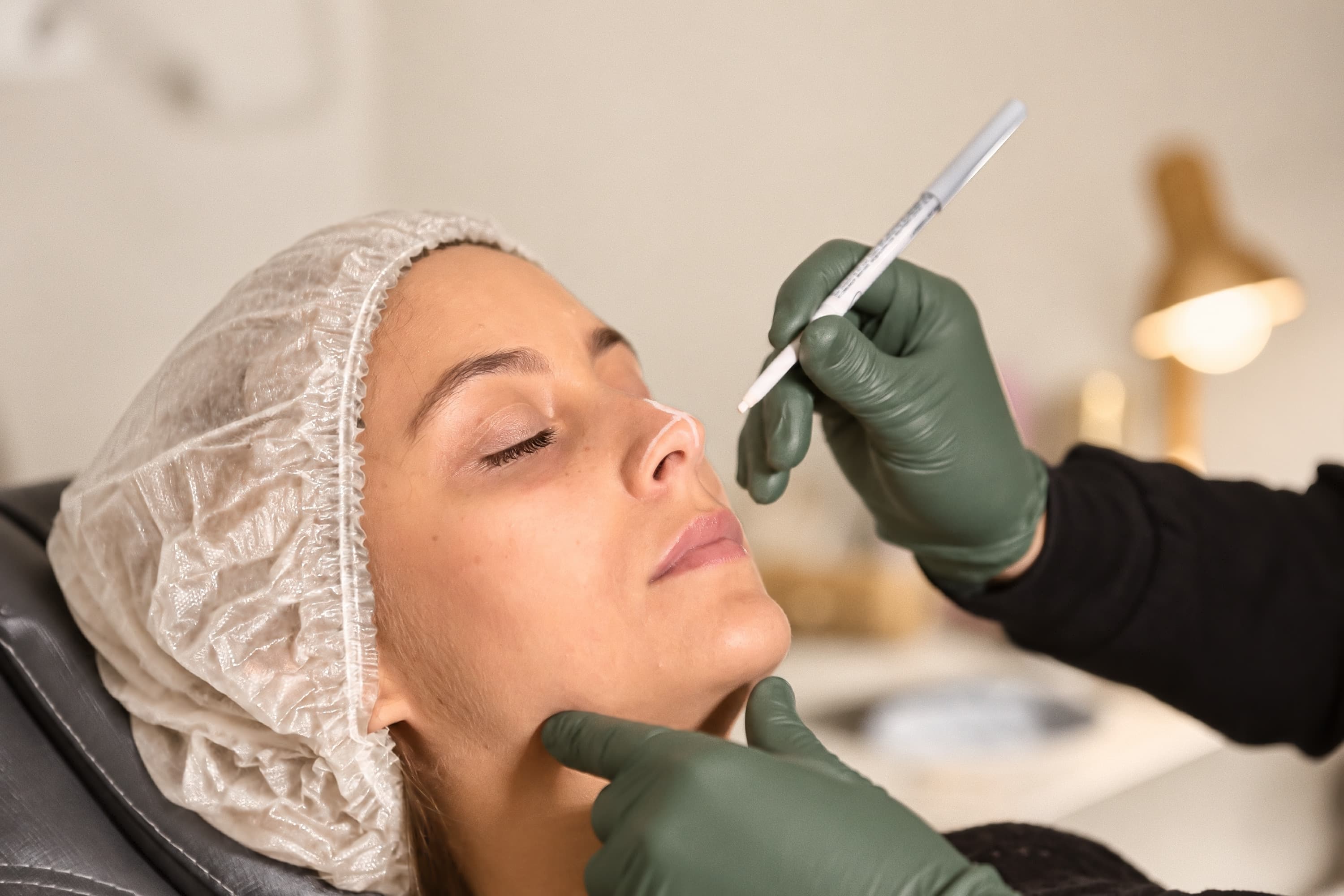
Microneedling with exosomes means applying an exosome serum to the skin immediately after a microneedling or RF microneedling pass, while the micro-channels are still open. The needles create temporary pathways through the skin barrier, and the exosomes are applied within minutes so they can reach the layers where repair is underway.
The sequence in most clinics looks like this: numbing cream, the microneedling treatment, then the exosome serum massaged over the treated area. Some products include a second application at home the same evening. The exosomes themselves add little to the sensation of the appointment; the microneedling is the part you feel.
People often ask whether the exosomes need the needles. For meaningful penetration, yes. Applying exosomes to intact skin is pleasant but is not the same treatment. The pairing is the whole idea.
What is an exosome facial?#
An exosome facial is a treatment where an exosome serum is applied to the face, usually after a gentle resurfacing step such as light microneedling, a mild peel, or a hydradermabrasion facial, so that the skin can absorb it. The term is used loosely. Some clinics use it to mean the full RF microneedling plus exosome pairing described above; others use it for a much gentler treatment with no needles at all.
That is why it is worth asking exactly what a clinic means when they advertise an exosome facial. Useful questions:
- Is there a microneedling or RF microneedling step, and if so, at what depth?
- What is the exosome product, where is it sourced from, and how is it tested?
- Is the exosome applied once in the clinic, or is there a take-home portion?
Why do clinics combine exosomes with RF microneedling?#
Clinics combine them because RF microneedling creates both the need for repair and the open channels that let a topical exosome reach where that repair is happening. The two are a natural fit rather than a marketing pairing.
The benefits providers most commonly report from adding exosomes after RF microneedling are:
- Shorter recovery. Redness and swelling tend to settle faster, which is the change most patients notice first.
- Less post-treatment irritation. Anti-inflammatory signaling can make the first 24 to 48 hours more comfortable.
- Better skin quality alongside tightening. Patients often describe skin that looks more hydrated and even in tone, not just firmer.
Two honest caveats. The published research on exosomes for skin is still young, and much of it is small studies or provider experience rather than large controlled trials. And the quality of exosome products varies a great deal between manufacturers, so who your clinic buys from matters. Neither caveat means the pairing does not work; it means you should expect measured claims rather than miracles.
Who is a good candidate for each?#
RF microneedling suits people with laxity, acne scarring, enlarged pores, fine lines, or uneven texture who can accept a day or two of pinkness, while exosomes suit anyone having a microneedling treatment who wants a smoother recovery, and people with sensitive or reactive skin who want a gentle boost without needles.
A rough guide:
- Loose skin along the jaw or neck, acne scars, crepey texture. RF microneedling is the primary treatment. Exosomes are an optional add-on.
- Melasma, rosacea, or darker skin tones worried about pigment changes. Pulsed-wave RF microneedling on a device like Sylfirm X is often chosen for these, and the calming effect of exosomes is a helpful companion. A provider should assess your skin in person before recommending anything.
- Dull, tired, dehydrated skin with no structural concerns. A gentler exosome facial may be enough, and you may prefer to skip the needles entirely.
- Pregnant or breastfeeding, active skin infection, certain autoimmune conditions or medications. Both treatments usually wait. Your provider will review your history.
What is the downtime for exosomes vs RF microneedling?#
RF microneedling usually means one to three days of redness and mild swelling, while exosomes on their own have no downtime and, when added after RF microneedling, often shorten the recovery rather than add to it.
After RF microneedling, most people look flushed the same day, pink the next, and close to normal by day two or three. Tiny pinpoint marks from the needles can be visible up close for a few days. Makeup is typically allowed after about 24 hours. Sun protection matters more than usual for a couple of weeks.
If exosomes were applied, you may be asked not to wash the treated area for several hours, sometimes overnight, so the serum can stay on the skin. Beyond that, the aftercare is the same as for RF microneedling alone.
Are exosomes FDA approved?#
No. No exosome product has FDA approval for any use, and the FDA has published a public safety notification advising against unapproved exosome products, particularly when they are injected or infused. In aesthetic settings, exosomes are applied topically as a cosmetic product, which is a different situation from injection, but the regulatory picture is still developing and it is fair to ask any clinic how they source and use theirs.
RF microneedling devices, by contrast, go through FDA device clearance. Sylfirm X is FDA-cleared as a radiofrequency device for dermatologic procedures (electrocoagulation and hemostasis); its use for melasma or rosacea is based on clinical studies and provider experience.
How do I decide: exosomes, RF microneedling, or both?#
Start with your main concern, because that decides the base treatment, and then decide whether a faster, calmer recovery is worth adding exosomes on top.
- If your concern is structural (laxity, scars, pores, texture), book RF microneedling and treat exosomes as an upgrade to the recovery and finish.
- If your concern is surface-level (dullness, dryness, mild redness) and you want no downtime, an exosome facial without deep needling is a reasonable first step.
- If you have melasma or rosacea, ask specifically about pulsed-wave RF microneedling, and consider exosomes for the calming effect.
- If you are unsure, a consultation with skin analysis will sort it out faster than any article can.
At Jade Aesthetics in Wheaton, IL, we offer Sylfirm X RF microneedling with the option to add exosomes, as well as traditional microneedling and the Spotlight facial, a lighter microneedling treatment that includes exosomes. We see patients from Naperville, Glen Ellyn, Lombard, and across DuPage County. Bring your questions and your skincare routine, and we will map out a plan that fits your skin and your calendar. Book a consultation to get started.