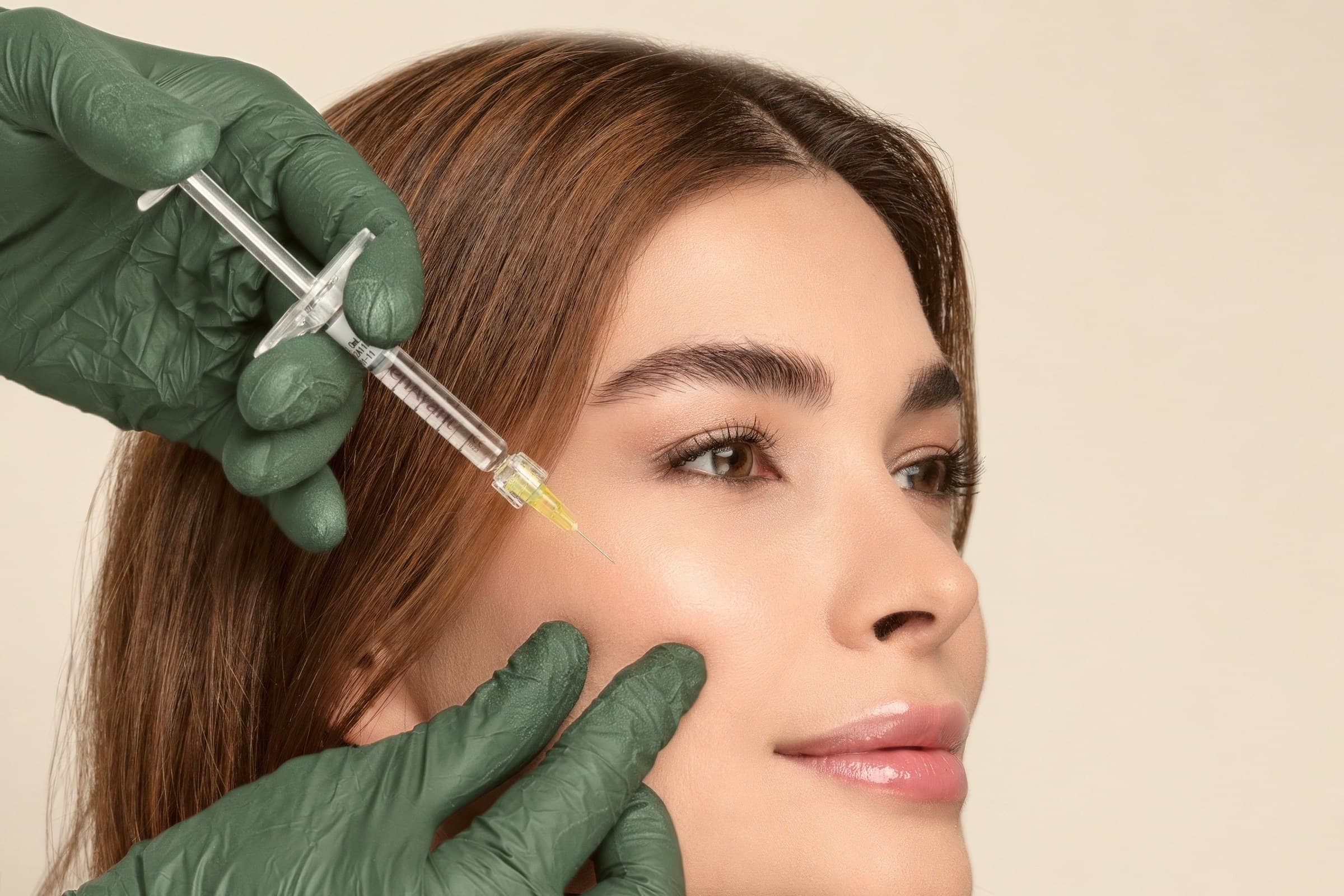
This guide is for men who are curious about Botox but don’t want to look “done.” Maybe the forehead lines are showing up in photos, people keep asking if you’re tired, or your partner already goes and you want to know what it is actually like.
The one-line answer: Botox for men is the same drug women get, used with a different plan. Men usually have stronger facial muscles and a lower, flatter brow, so a good injector adjusts the dose and where it goes. Done well, people tend to notice that you look rested, not that you had Botox.
Is Botox for men different from Botox for women?
#The product is identical, but the treatment plan usually is not, because men tend to have larger, stronger facial muscles and a different brow shape. Those differences change how many units are needed and where they are placed.
Here is what the research shows:
- Men respond less to the standard dose. In the clinical trials behind the FDA label for frown lines, exploratory analyses found that 59 percent of men responded at the labeled dose at day 30, compared with 85 percent of women.
- Men often need higher doses. In a 2005 study of 80 men with frown lines, doses of 40, 60, and 80 units worked better than 20 units, and the effect lasted longer as the dose went up. A 2024 review of neuromodulators in men reached the same conclusion: men appear to need higher doses for facial wrinkles.
- Men have more muscle to treat. An expert consensus on forehead treatment notes that men typically have greater muscle mass and a larger forehead than women.
- Men’s brows sit lower. The same consensus points out that eyebrows are naturally lower in men, and relaxing the lower forehead too much can make the brows drop.
At Jade Aesthetics in Wheaton, IL, your injector plans around these differences from the start, so the result fits your face rather than a one-size-fits-all pattern.
What is “Brotox”?
#“Brotox” is a nickname for Botox treatments in men, not a different product or technique. It is the same FDA-approved Botox Cosmetic, planned for male anatomy and male goals.
The nickname caught on because more men are booking it. A 2024 review in Dermatologic Surgery describes neuromodulators (the umbrella term for wrinkle-relaxing injections like Botox) as gaining popularity among men, with crow’s feet often the first area they ask about.
Where do men usually get Botox?
#The most common areas for men are forehead lines, the frown lines between the brows, and crow’s feet. Botox Cosmetic is FDA-approved for all three, plus vertical neck bands, which became its fourth approved area in October 2024.
Here are the areas men ask about most, and the FDA status of each:
| Area | What it treats | FDA status |
|---|---|---|
| Forehead lines | Horizontal lines when you raise your eyebrows | Approved (Botox Cosmetic) |
| Frown lines | The “11s” between the brows that can make you look stressed | Approved (Botox Cosmetic) |
| Crow’s feet | Lines at the outer corners of the eyes from squinting and smiling | Approved (Botox Cosmetic) |
| Neck bands | Vertical cords on the front of the neck | Approved (Botox Cosmetic, since 2024) |
| Underarm sweating | Severe sweating that antiperspirants don’t control | Approved (BOTOX, the medical version, since 2004) |
| Jaw clenching | Clenching and a bulky jaw muscle (masseter) | Off-label |
Off-label means a provider uses Botox in a way that isn’t listed on its FDA label. Masseter treatment can ease clenching and soften a wide lower face, but many men want to keep a strong jawline, so it is planned carefully.
Our post on Botox benefits beyond wrinkles covers jaw and sweating treatments in more detail.
How many units of Botox do men need?
#There is no fixed number, but men often need more units than women for the same area, and your injector decides the amount at your consultation after watching how your muscles move. The right dose is the one that softens the lines you care about without flattening your expressions.
For reference, common ranges are 10 to 30 units for the forehead, 15 to 25 units for frown lines, and 10 to 15 units per side for crow’s feet. Men with strong muscles may need doses toward the top of a range or above it. The standard labeled dose for frown lines is 20 units, and the 2005 study above found higher doses more effective in men.
What affects your number:
- Muscle strength: stronger muscles need more product to relax.
- Line depth: deeper, longer-standing lines may need more units or a combination with other treatments.
- Your goal: some men want lines barely softened; others want them smooth.
- Your brow: the forehead dose is balanced against keeping the brow from dropping.
How do you keep Botox looking natural on a man?
#Natural-looking Botox for men keeps a strong, fairly flat brow and some movement, and treats only the muscles causing the lines you dislike. The usual signs of overdone Botox in men are a frozen forehead, a heavy, dropped brow, or an arched brow that looks surprised.
How a careful injector avoids those:
- Respecting the male brow. Men’s brows tend to sit low and straight. The plan aims to keep that shape rather than lifting the tails into an arch.
- Protecting the lower forehead. Too much product low on the forehead can let the brows drop, so placement there is conservative.
- Treating areas in balance. The FDA label calls for treating forehead lines together with frown lines to lower the chance of a dropped brow. Balancing the two usually looks more natural than treating one area hard.
- Starting conservatively. It is easier to add a few units at a follow-up than to wait months for too much to wear off.
Your injector may book a two-week check to see how your muscles responded and decide whether a small touch-up would help with symmetry.
What should men expect at a Botox appointment?
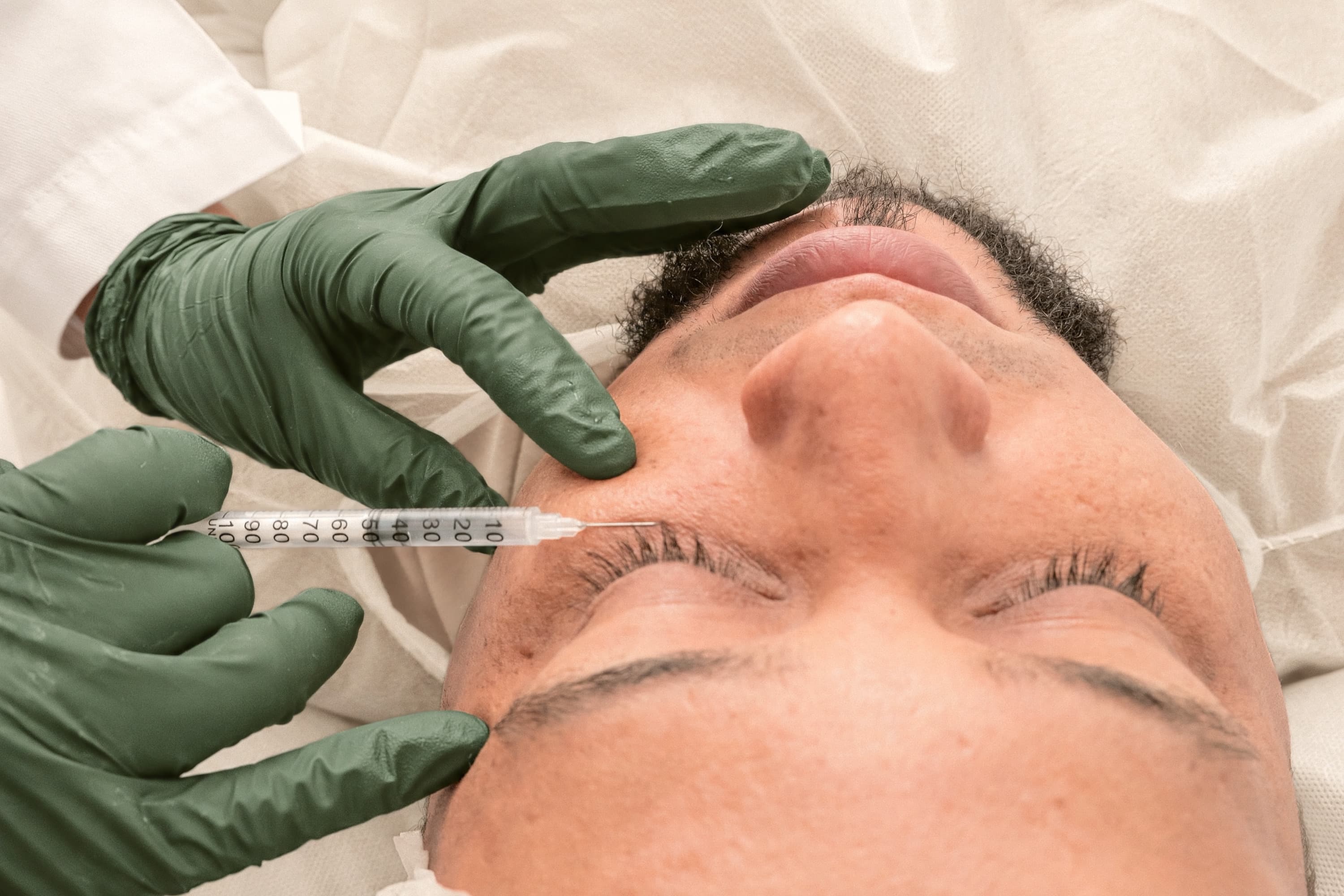
#A Botox appointment is quick: a short consultation, about 10 to 15 minutes of injections, and you can go back to work right after. Most men describe it as a series of brief, mild pinches.
Before and during:
- Consultation: your injector looks at your muscles at rest and in motion and plans the units for each area.
- Prep: the skin is cleansed, and ice may be used for comfort. Numbing cream usually isn’t needed because the needle is very fine.
- Injections: small amounts go into each target muscle.
After:
- First 4 hours: don’t rub or massage the area, and stay upright.
- First 24 hours: skip strenuous exercise, hot yoga, and saunas, and avoid alcohol to limit bruising. If you lift or run daily, plan your appointment around a rest day.
- First 2 weeks: hold off on facials and peels.
Results:
- Days 2 to 3: lines begin to soften.
- Days 7 to 14: full results.
- Months 3 to 4: results typically last this long before you need a maintenance visit.
The most common side effects are tenderness, swelling, or bruising at the injection sites and headache. Less often, a brow or eyelid can droop for a few weeks while the product wears off. Like all botulinum toxins, Botox carries an FDA boxed warning about the rare spread of toxin effect beyond the injection area, which can cause trouble swallowing, speaking, or breathing. Seek care right away if that happens.
How much does Botox for men cost?
#Botox cost depends mainly on how many units your plan needs and how many areas you treat, so men who need more units can pay more per visit than someone with lighter muscles. We give exact pricing at your consultation, and pricing is also shown when you book online.
What drives your total:
- Units per area: the biggest factor, and the one where men most often differ.
- Number of areas: treating the forehead, frown lines, and crow’s feet together adds up differently than one area alone.
- How often you come back: results usually last 3 to 4 months, so plan for a few visits a year if you want to keep the effect.
- Add-ons: masseter or sweating treatments use separate doses on top of facial areas.
If you are budgeting, ask your injector for the expected units per area so you know what a typical visit looks like before you commit.
Is Botox right for you?
#Botox is a good fit if expression lines bother you, you want to look rested without changing your face, and you’re comfortable with a quick visit every few months. It may not be right if you are hoping to fix volume loss or deep lines that show even when your face is relaxed. Those often respond better to filler, which our guide to Botox vs filler explains.
A Botox appointment fits easily into a lunch break. Your injector will look at how your face moves, talk through the result you want, and build a plan that keeps you looking like yourself. Book a consultation to get started.