If you've been researching medical weight loss, you've almost certainly come across two names: semaglutide and tirzepatide. These prescription GLP-1 medications have changed the landscape of weight management — offering a medically supervised approach for patients who haven't achieved lasting results through diet and exercise alone.
At Jade Aesthetics in Wheaton, IL, our medical weight loss program uses these medications as part of a personalized, physician-guided plan. But before you book a consultation, it helps to understand what these medications are, how they work, and how they compare.
What Are GLP-1 Receptor Agonists?#
GLP-1 stands for glucagon-like peptide-1 — a hormone your body naturally produces in the gut after you eat. This hormone plays several important roles: it signals your brain that you're full, slows the rate at which food leaves your stomach, and helps regulate blood sugar by stimulating insulin release.
GLP-1 receptor agonists are medications that mimic the action of this natural hormone. Because they bind to the same receptors as your body's own GLP-1, they amplify the feelings of fullness, reduce hunger, and slow digestion — all of which contribute to reduced calorie intake and, over time, meaningful weight loss.
Both semaglutide and tirzepatide belong to this class of medications, but they work in slightly different ways.
How Semaglutide Works#
Semaglutide is a GLP-1 receptor agonist — meaning it activates the GLP-1 receptor specifically. It was originally developed for type 2 diabetes management and later studied for weight loss at higher doses.
Semaglutide promotes weight loss through multiple mechanisms:
- Appetite suppression: By activating GLP-1 receptors in the hypothalamus (the brain's appetite center), semaglutide helps reduce feelings of hunger and increase feelings of fullness after meals.
- Slowed gastric emptying: Semaglutide slows the rate at which food moves from the stomach into the small intestine. This means you feel satisfied longer after eating and are less likely to overeat.
- Improved satiety signaling: The medication enhances the natural signals that tell your brain you've had enough to eat, helping patients naturally reduce their calorie intake without constant willpower-based restriction.
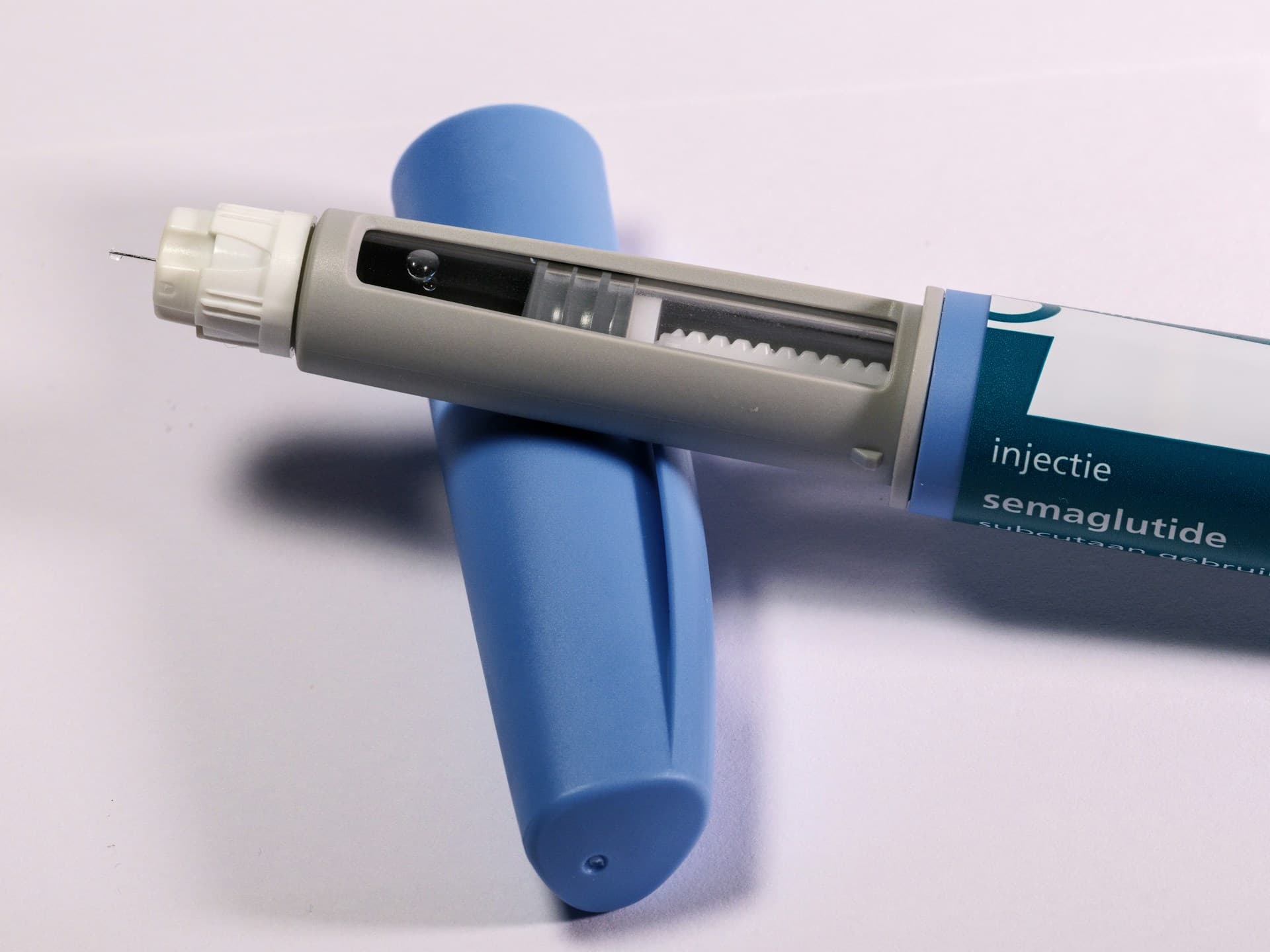
Semaglutide is administered as a once-weekly subcutaneous injection. Dosing typically starts low and is gradually increased over several weeks to help the body adjust and minimize side effects.
How Tirzepatide Works#
Tirzepatide takes a different approach. It is a dual GIP/GLP-1 receptor agonist — the first medication in its class to activate both the GLP-1 receptor and the GIP (glucose-dependent insulinotropic polypeptide) receptor simultaneously.
GIP is another gut hormone that, like GLP-1, plays a role in blood sugar regulation and energy balance. By targeting both receptors, tirzepatide produces complementary effects:
- Dual appetite regulation: Like semaglutide, tirzepatide activates GLP-1 receptors in the brain to suppress appetite and slow gastric emptying. The additional GIP receptor activation further enhances energy balance and fat metabolism.
- Enhanced insulin sensitivity: The dual-receptor approach has been shown in clinical studies to improve insulin sensitivity and insulin secretory responses — which may benefit patients whose weight is complicated by metabolic or blood sugar issues.
- Synergistic effects: Research published in peer-reviewed journals has demonstrated that co-activation of GIP and GLP-1 receptors produces a greater combined effect than either pathway alone.
Like semaglutide, tirzepatide is administered as a once-weekly subcutaneous injection with gradual dose titration.
Semaglutide vs. Tirzepatide: Key Differences#
Both medications are effective tools for medical weight loss, but they differ in important ways:
Receptor targets: Semaglutide activates the GLP-1 receptor only. Tirzepatide activates both the GIP and GLP-1 receptors, making it a dual agonist.
Mechanism: Both reduce appetite and slow gastric emptying. Tirzepatide's additional GIP activation may provide added benefits for insulin sensitivity and metabolic health.
Clinical outcomes: In head-to-head clinical studies, tirzepatide has been associated with greater average weight reduction compared to semaglutide. However, individual responses vary — some patients respond better to one medication than the other.
Side effect profile: Both medications share similar gastrointestinal side effects, most commonly nausea, which tends to improve over time with gradual dose increases. Some studies suggest slightly higher rates of GI side effects with tirzepatide at higher doses.
Which is right for you? The choice between semaglutide and tirzepatide depends on your health history, metabolic profile, treatment goals, and how your body responds. This is a decision best made with your provider during a comprehensive consultation.
What to Expect During Treatment#
At Jade Aesthetics, medical weight loss is not a one-size-fits-all program. Here's what the process typically looks like:
- Comprehensive assessment — Your provider reviews your health history, body composition, metabolic factors, and weight loss goals. Lab work may be ordered to identify any underlying conditions.
- Personalized plan — Based on your assessment, your provider recommends a medication, starting dose, and complementary strategies such as nutritional guidance and wellness treatments like vitamin B12 injections.
- Gradual dose titration — Your medication dose starts low and increases gradually over several weeks. This approach helps your body adjust and minimizes gastrointestinal side effects.
- Ongoing monitoring — Regular follow-up appointments allow your provider to track progress, adjust dosing, manage any side effects, and provide accountability and support.
- Long-term planning — As you approach your goals, your provider works with you on a sustainable maintenance strategy to help preserve your results.
Most patients begin to notice reduced appetite within the first 2-4 weeks of treatment. Progressive weight loss typically occurs over the following months, with the most significant changes often seen within the first 6-12 months.
Common Side Effects#
Like all medications, GLP-1 receptor agonists can cause side effects. The most common are gastrointestinal:
- Nausea — the most frequently reported side effect, especially during dose increases
- Vomiting — less common than nausea, but can occur during titration
- Diarrhea — typically mild and temporary
- Constipation — some patients experience this instead of or in addition to diarrhea
- Decreased appetite — this is both a therapeutic effect and something patients notice as a side effect
These side effects are generally most noticeable in the first few weeks of treatment or after a dose increase, and tend to improve as the body adjusts. The gradual titration schedule used in our program is specifically designed to minimize these effects.
Serious side effects are rare but possible. Your provider will discuss these with you before starting treatment and will monitor you throughout your program.
Frequently Asked Questions About GLP-1 Weight Loss#
How much weight can I lose with GLP-1 medications? Results vary by individual. Clinical studies of GLP-1 medications have demonstrated significant weight reduction in participants with overweight or obesity. Your actual results will depend on factors including your starting weight, medication response, adherence, and lifestyle changes. Your provider will set realistic expectations during your consultation.
How long do I need to take the medication? Treatment duration varies. Some patients use GLP-1 medications for several months to reach their goal weight, then transition to a maintenance plan. Others may benefit from longer-term use. Your provider will work with you to determine the right timeline.
Are GLP-1 medications safe? GLP-1 receptor agonists have been extensively studied in large-scale clinical trials. Like all prescription medications, they carry potential risks and side effects, which is why medical supervision is essential. At Jade Aesthetics, your provider monitors your health throughout treatment with regular check-ins and lab work as needed.
Who is a good candidate for medical weight loss? Medical weight loss may be appropriate for adults with a BMI of 30 or higher, or a BMI of 27 or higher with a weight-related health condition. It is designed for patients who have not achieved lasting results through diet and exercise alone. Pregnant or breastfeeding patients are not candidates.
Can I combine GLP-1 treatment with other services? Yes. Many patients complement their weight loss program with treatments like B12 injections for energy support, NAD+ injections for cellular health, or CoolSculpting for targeted body contouring once they've reached or neared their goal weight.
Will I regain weight if I stop the medication? Weight regain is possible if lifestyle changes are not maintained after stopping medication. That's why our program includes long-term maintenance planning — and some patients choose to continue a lower maintenance dose for ongoing support. Your provider will help you create a sustainable plan.
How is medical weight loss different from diet programs? Medical weight loss addresses the biological, hormonal, and metabolic factors that make weight loss difficult. Unlike commercial diet programs, it is supervised by a medical provider, includes prescription medication access, and is tailored to your individual physiology — not a generic meal plan.
Book Your Weight Loss Consultation in Wheaton, IL#
Medical weight loss is not about willpower — it's about giving your body the right tools, under the right guidance, to achieve lasting change. At Jade Aesthetics in Wheaton, IL, our physician-guided program combines prescription GLP-1 medications with personalized support to help you reach and maintain a healthier weight.
We proudly serve patients from Wheaton, Glen Ellyn, Naperville, Winfield, West Chicago, and throughout DuPage County.
Ready to learn if GLP-1 weight loss is right for you? Book a consultation at Jade Aesthetics today.